
Comprehensive Overview of Global Sanctions Programs 1484605082
Comprehensive Overview of Global Sanctions Programs
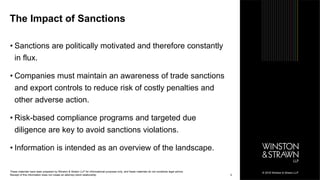
The implementation of sanctions programs overview varies among global powers, often reflecting the political climate, international relations, and strategic interests of the countries involved. Sanctions programs are complex tools used in foreign policy to influence or change the behavior of nations or groups that violate international norms. This article aims to provide a detailed examination of the types of sanctions, their implications on global politics, and the mechanisms through which they operate.

Understanding Sanctions: Types and Mechanisms
Sanctions can be broadly categorized into several types: economic sanctions, military sanctions, and diplomatic sanctions. Each type is designed to achieve different objectives, yet they all share a common goal of altering the conduct of the target state or organization.
Economic Sanctions
Economic sanctions are widely used and can include trade embargoes, asset freezes, and financial restrictions. The primary aim is to cut off resources that the targeted entity relies upon, thereby constraining its ability to operate effectively. For example, the United States has imposed various economic sanctions on countries like Iran and North Korea to pressure them into compliance with international laws regarding nuclear proliferation.
Military Sanctions
Military sanctions may involve arms embargoes, restricting weapon supply to a targeted nation or group, and other coercive measures that limit military capabilities. Such sanctions are often employed in situations of armed conflict or human rights violations to prevent the escalation of violence.
Diplomatic Sanctions
Diplomatic sanctions entail the reduction or termination of diplomatic relations, which may include expelling diplomats, cutting off communication, or suspending memberships in international organizations. These actions are usually motivated by a nation’s disapproval of a target’s policies or actions.
The Role of International Organizations
International organizations such as the United Nations (UN) and the European Union (EU) play a significant role in the establishment and enforcement of sanctions. The UN Security Council can impose sanctions to maintain or restore international peace and security. However, the effectiveness of these sa
nctions can be hindered by political disagreements among member states, the complexity of global trade, and the willingness of other countries to bypass or circumvent such measures.
Case Study: United Nations Sanctions on North Korea
A notable example is the series of sanctions imposed on North Korea due to its continued pursuit of nuclear weapons. These sanctions have included restrictions on exports of coal, textiles, and seafood as well as limitations on oil imports. While these measures aim to pressure the North Korean government into abandoning its nuclear ambitions, the actual impact has been debated, as the regime continues to survive amid claims of resilience and adaptation.
Impact of Sanctions on Targeted Nations
The imposition of sanctions can have profound effects on the economies and societies of targeted nations. While the intent is to apply pressure on political leaders, sanctions often adversely impact the civilian population, leading to humanitarian crises. Basic necessities may become scarce, leading to increased suffering among the populace.
Challenges in Sanction Implementation
Implementing sanctions presents numerous challenges. Evasion strategies often emerge, with targeted states seeking ways to circumvent restrictions through alternative trading partners or illicit networks. Moreover, the effectiveness of sanctions can diminish over time if the target state finds ways to adapt or if geopolitical dynamics shift.
The Future of Sanctions Programs
As globalization continues to expand, the landscape of sanctions is likely to evolve. New technologies and communication platforms may provide opportunities for digital sanctions, targeting cyberspace rather than traditional economic channels. Additionally, the international community must navigate the delicate balance between enforcing sanctions and avoiding humanitarian impacts on civilian populations.
Conclusion
Sanctions remain a critical component of international relations and foreign policy, serving as both a deterrent and a form of punishment for nations that violate international norms. Understanding the nuances of these programs, their types, implementation, and implications is essential for policymakers, diplomats, and the global community as a whole. As the world becomes more interconnected, the challenge will be finding effective and ethical ways to enforce sanctions that promote peace without causing undue harm to innocent civilians.
No Comments
Sorry, the comment form is closed at this time.